Smallpox was once one of the deadliest viral infections in human history, caused by the variola virus and responsible for devastating outbreaks for thousands of years. Before its eradication, smallpox caused high fever, intense fatigue, and a distinctive rash that produced fluid‑filled lesions over the body. These lesions eventually crusted over and fell off, often leaving survivors with deep, pockmarked scars, especially on the face and arms, as well as long‑term complications such as blindness and other health issues. Historically, variola major, the more severe form of the virus, had a mortality rate of around 30%, making it a persistent global threat that spared few communities and claimed countless lives. Smallpox could spread through close contact with infected people and contaminated materials, meaning entire families and villages could be afflicted during outbreaks. Faced with this relentless scourge, medical innovators and public health leaders pursued strategies to halt its toll on humanity.
The breakthrough in controlling smallpox came with vaccination—an idea first demonstrated by British physician Edward Jenner in 1796, who showed that inoculation with a related virus (vaccinia) could protect against smallpox. This discovery laid the foundation for the first successful human vaccine and was a turning point in the long battle against the disease. Over the next century and a half, vaccination techniques improved and were widely adopted in many countries. But it was the World Health Organization’s global eradication campaign, launched in 1967, that truly changed the course of history. Through mass vaccination and targeted “ring vaccination” strategies, health authorities worked to immunize populations around outbreaks, cutting transmission and driving smallpox toward extinction. By 1977, the last known naturally occurring case was recorded in Somalia, and in 1980 the WHO officially declared smallpox eradicated worldwide—the only human disease to have been eradicated through coordinated vaccination efforts. Routine smallpox vaccination in the United States had already ended in the early 1970s once the disease was brought under control domestically.
The vaccine used during the eradication era employed the vaccinia virus, a relative of variola that does not cause smallpox disease but stimulates protective immunity. Rather than being delivered like modern shots, the vaccine was administered using a bifurcated needle—a simple two‑pronged tool specifically adopted during the WHO eradication campaign for its effectiveness and ease of use. The needle was dipped into the vaccine solution and used to make multiple rapid superficial punctures in the skin, typically on the upper arm. This “multiple puncture method” ensured a controlled localized infection that triggered a strong immune response, visible as a raised bump and later a blister at the vaccination site. The blister eventually formed a scab, which, after healing, left behind a small permanent scar. The bifurcated needle played a key role in the success of the eradication program because it was inexpensive, reusable after sterilization, and allowed vaccinators to deliver doses quickly and consistently.
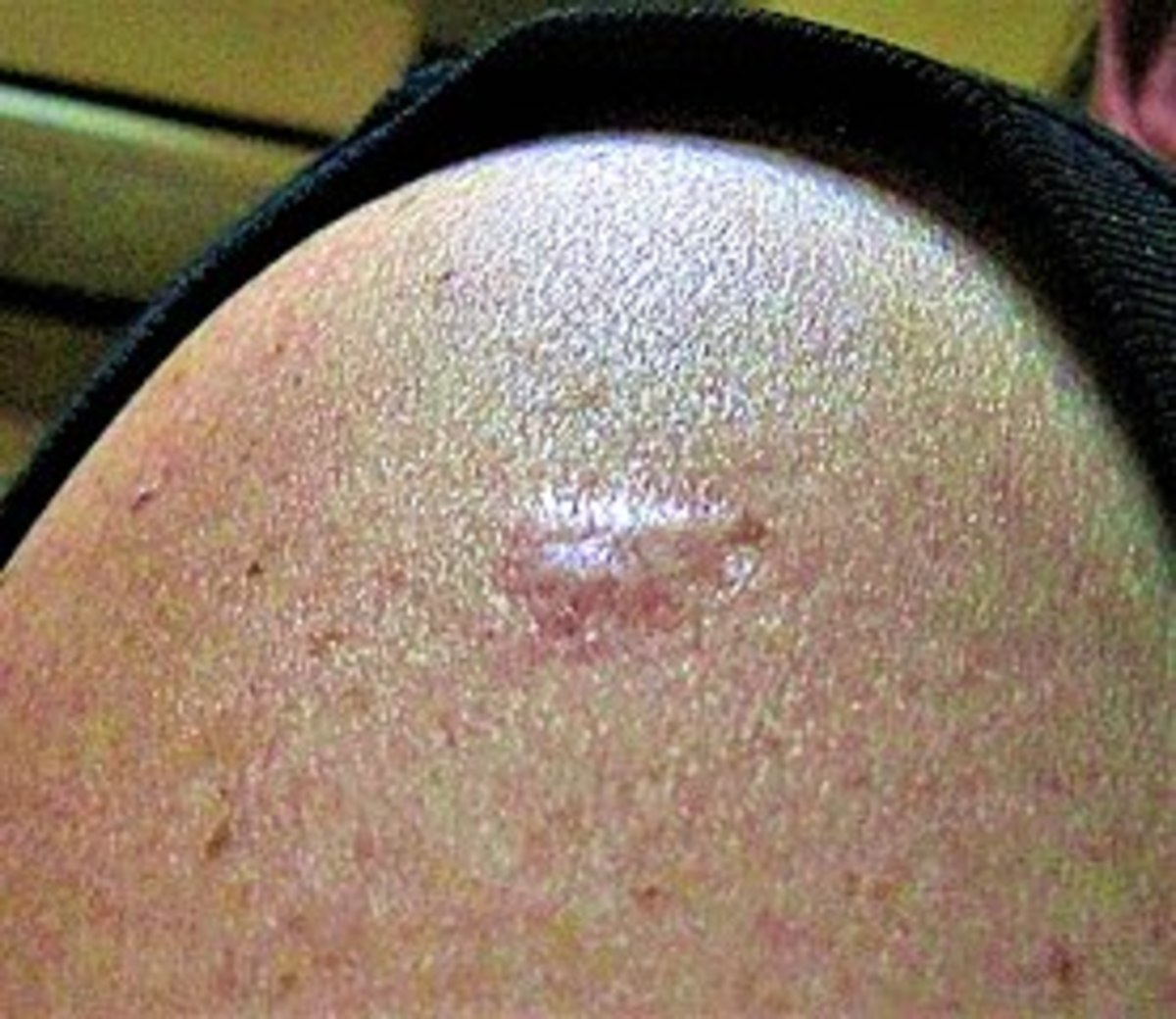
A hallmark remnant of a pre‑eradication era is the smallpox vaccine scar, typically found on the upper arm of those vaccinated. This scar is a direct result of the body’s immune response to the vaccinia virus introduced during vaccination. In the days after vaccination, redness and swelling would give way to a blister‑like lesion that later formed a scab, which then fell off, leaving a small, round, or slightly oval scar. Its appearance could vary: some people developed shallow, subtle marks, while others had more pronounced scars due to individual healing differences or stronger immune reactions. These marks became ubiquitous in many countries before routine vaccination ceased because they indicated that the vaccine “took”—meaning the immune system had responded successfully and the individual was likely protected. Today, such scars are much less common, especially among people born after the 1970s, because routine vaccination ended following global eradication and the risk of natural smallpox infection disappeared.
In contemporary contexts, a smallpox vaccine scar serves as a historical marker, a physical reminder of both the scientific achievement of vaccination and a time when smallpox was a feared, widespread disease. Most people under the age of 50 or so have never been vaccinated against smallpox, and the vaccine is no longer given to the general public, though it may still be administered in limited cases—for example, to laboratory workers who handle orthopoxviruses similar to variola. Because the scar itself results from a deliberate, localized immune reaction rather than the disease, it does not carry ongoing health risk. Still, its sight can prompt curiosity, especially among younger generations unfamiliar with the disease’s historical impact. For those who wish to reduce the appearance of an old scar for cosmetic reasons, modern dermatological options like sunscreen to prevent darkening or more advanced procedures such as laser therapy can help diminish visibility, though the mark may never disappear completely in most cases. Many people, however, regard the scar not as a blemish but as a symbol of protection and participation in one of medicine’s greatest public health victories.
The story of smallpox—from a devastating global threat to its complete eradication—stands as one of humanity’s greatest triumphs over disease. The variola virus once killed about one in three people it infected and left countless survivors with permanent physical consequences; vaccination changed that trajectory. Through widespread immunization campaigns, sustained public health efforts, and innovations like the bifurcated needle, smallpox was eliminated as an endemic disease, with the final naturally occurring case recorded in 1977 and official eradication declared in 1980. Because of these coordinated efforts, the live virus no longer circulates in the general population, and the risk of smallpox transmission has been eliminated worldwide—a milestone that continues to shape public health strategies today. The enduring scars left on arms around the world serve as silent reminders of a time when a once‑dreaded disease was conquered and a testament to the power of vaccines to protect generations from the brink of epidemic devastation.