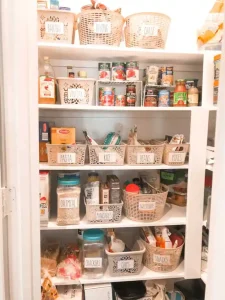
Create a calm, efficient kitchen with budget-friendly DIY pantry organization. Using dollar store bins, you can build a practical, stylish, and long-lasting storage system—no expensive supplies or professional help needed.

Transforming a cluttered pantry doesn’t require expensive products or a picture-perfect aesthetic—it requires intention, clarity, and systems that support real daily habits. Pantries often feel chaotic because they store many different items without a guiding structure, but a budget-friendly approach using dollar store bins can dramatically improve both function and visual calm. When organization is treated as a practical tool rather than a design performance, the pantry becomes easier to maintain and far less stressful to use.

The process begins with a full reset. Completely emptying the pantry reveals expired items, duplicates, and forgotten products while creating a clean slate for thoughtful planning. Measuring shelves and reflecting on daily routines before shopping ensures that storage solutions fit the space and serve actual needs. This preparation step prevents wasted money and frustration, laying the groundwork for a system that will last.

Affordable dollar store bins are central to this transformation because they offer flexibility, variety, and consistency without financial strain. Clear bins improve visibility and reduce overbuying, while stackable and handled designs maximize space and accessibility. Choosing bins based on function—rather than appearance alone—creates a pantry that looks cohesive while remaining highly practical.

Effective organization depends on intentional categorization. Grouping items by use, such as snacks, breakfast foods, or quick meals, makes the pantry intuitive and efficient. Labels reinforce clarity for everyone in the household, and thoughtful placement—frequently used items at eye level, heavier items below—supports ease and safety. Creating zones turns the pantry into an active workspace rather than passive storage.

Customization is essential for long-term success. Each household’s needs differ, whether that means kid-friendly snack access, vertical storage for small spaces, or aesthetic preferences that make the space feel welcoming. A flexible, low-cost system allows adjustments as habits, diets, or family size change, ensuring the pantry evolves with real life rather than becoming outdated.

Maintenance is simple when the system aligns with daily behavior. Brief weekly resets and occasional reassessments prevent clutter from returning. An organized pantry reduces food waste, supports smarter grocery shopping, and streamlines meal planning. More than convenience, it offers a sense of calm and control—proving that thoughtful organization is an accessible form of self-care, not a luxury reserved for large budgets or perfect homes.
Related Posts

At our wedding, my groom playfully smashed my face into the cake, leaving me nearly in tears. The stunned crowd watched as my brother intervened unexpectedly, creating a surprising, unforgettable moment that shifted the mood and showcased family dynamics, emotions, and the unpredictability of such celebrations.

Life, in its quiet rhythms and ordinary routines, often brings a deep sense of satisfaction, something I feel fully today as I navigate school runs, soccer practices,…

A beloved American icon is returning, sparking nostalgia and excitement. Its comeback revives cherished memories while introducing the classic brand, character, or cultural symbol to a new generation of fans.

Friendly’s, long regarded as an iconic American restaurant chain, is quietly making a comeback by leaning on one of its greatest assets: familiarity. For decades, the chain…

Five warning signs that a wild forest root may be unsafe to eat are unusual odors, bitter taste, milky sap, unfamiliar markings, or similarity to known poisonous plants. Foraging without proper knowledge can be dangerous, so recognizing these signs helps prevent illness and ensures safer outdoor food choices.

For centuries, people living near forests, wetlands, and untamed landscapes relied on wild plants and roots as essential sources of nourishment and, in some cases, medicine. When…

The disappearance of Ronald McDonald from public appearances stems from growing concerns about his influence on children and associations with “creepy clown” incidents. McDonald’s shifted marketing toward healthier options and digital campaigns, making the mascot rarely seen and reflecting changing cultural attitudes and corporate caution.

For decades, Ronald McDonald was one of the most recognizable figures in childhood culture, serving as the cheerful, red-haired, red-suited mascot of McDonald’s. From television commercials to…

New York City officials, under Mayor Zohran Mamdani, are considering ending free street parking to address a $5.4 billion budget gap, exploring policy changes to increase revenue and manage city finances.

New York City is confronting a major fiscal challenge, with a projected $5.4 billion budget shortfall prompting city officials to explore a range of revenue-generating strategies. One…

The messages hidden in a woman’s legs are often linked to body language and posture. Crossed legs can indicate comfort or self-protection, while relaxed positioning suggests confidence. Restless movement may show nervousness. Leg positioning, like all nonverbal cues, depends on context, personality, and environment, not fixed meanings.

Legs communicate more than we often realize, conveying subtle cues about posture, balance, and confidence without a single word. From the way someone stands to the rhythm…

Leave a Reply

Your email address will not be published. Required fields are marked *