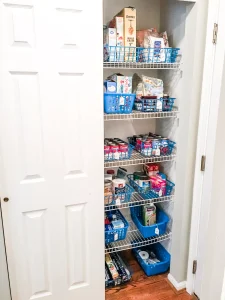
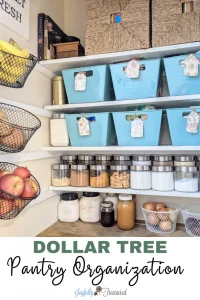
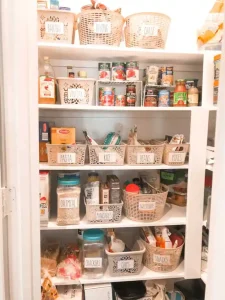
Transforming a cluttered, stressful pantry into a calm, functional part of the kitchen doesn’t have to be expensive or overwhelming. Pantries naturally become chaotic, holding a mix of items in all shapes, sizes, and usage patterns. Without a clear system, even the most spacious pantry can feel cluttered. A budget-friendly approach using affordable dollar store bins proves that organization can be both practical and visually cohesive, all without straining your wallet. The key is intention over perfection: when the goal shifts from creating a showroom to supporting daily habits, every decision—from what to keep to how to group items—becomes simpler. An organized pantry reduces friction in cooking and meal planning, makes daily routines smoother, and even lowers mental stress, as visual order promotes a sense of control and clarity.
The first step in a successful pantry transformation is a complete reset. Emptying the shelves may feel daunting, but it reveals hidden patterns—duplicate purchases, forgotten items, or categories that have grown haphazardly. This is the moment to remove expired products, rarely used ingredients, or items that no longer fit your current habits. Cleaning the shelves thoroughly sets a fresh starting point, emphasizing that this is more than a quick tidy—it’s a meaningful reset. Measuring shelf space ensures that any containers purchased will fit, avoiding frustration and wasted money. During this stage, consider daily routines: which items are used most frequently, and which can be stored less prominently? Thoughtful preparation now makes the entire project smoother and sets the stage for long-term success.
Dollar store bins are central to an accessible, flexible pantry. They come in clear plastic, wire, woven-look, and neutral-toned designs that suit almost any kitchen style. Their affordability allows experimentation—you can test layouts and adjust categories without stress. Functional selection matters most: use bins to corral snacks, baking supplies, or canned goods. Clear bins are particularly useful for frequently consumed items, reducing overbuying and forgotten products. Handles improve access on deep shelves, and stackable designs maximize vertical space. Thoughtfully chosen bins create a consistent look, mimicking high-end organization systems without the cost.
Intentional categorization transforms bins into a cohesive system. Group items by use rather than type—for example, keep breakfast foods together, or dedicate a section to quick meals and snacks. Subdivide categories further to prevent overcrowding and make it immediately clear where items belong. Labels reinforce this clarity, guiding everyone in the household. They don’t need to be fancy; readability and consistency matter most. Placement should reflect daily habits: keep frequently used items at eye level, heavy items lower for safety, and create zones that support your cooking routines. A well-thought-out layout turns a pantry from a storage afterthought into an intuitive workspace.
Customization ensures a pantry system is sustainable. Families may use lower snack bins for children, while smaller households might rely on vertical storage or over-the-door solutions. Aesthetic preferences can be incorporated without extra cost—neutral colors, rustic textures, or simple clear bins all work. Personal touches, like handwritten labels or small decorative elements, make the pantry feel welcoming rather than clinical. Flexibility is crucial: as habits, dietary needs, or schedules change, your system should adapt without requiring a complete overhaul. When a pantry reflects real-life use, it naturally stays organized.
Maintaining an organized pantry requires minimal effort: a weekly check to return items to their bins and wipe shelves is usually enough. Periodic reassessment ensures the system continues to meet evolving needs. Long-term benefits extend beyond convenience—organized pantries support intentional grocery shopping, reduce food waste, and improve kitchen efficiency. Meals are easier to plan, items are less likely to be forgotten, and opening a calm, orderly pantry provides a small but meaningful sense of satisfaction. With simple tools, affordable bins, and intentional planning, a pantry can become one of the most supportive and stress-free spaces in the home, proving that effective organization is achievable for anyone willing to approach it with clarity and patience.