Dyan Cannon’s life and career reflect the enduring complexity of Hollywood stardom, where public image and private reality rarely align. For decades, her name has evoked a particular era of American cinema defined by glamour, elegance, and cultural influence. With her expressive eyes, radiant smile, and natural charisma, Cannon became a symbol of effortless charm at a time when movie stars were expected to embody aspiration itself. To audiences, her life appeared almost scripted—filled with acclaimed performances, red-carpet appearances, and industry recognition. Yet beneath that polished exterior was a woman navigating the psychological and emotional demands of fame, constantly reshaping her identity amid expectations that left little room for vulnerability. Even long after her peak years in Hollywood, Cannon remains a figure of fascination, illustrating how a public legacy continues to evolve rather than fade quietly with time.
Her professional achievements stand as evidence of both talent and determination. Cannon’s career spanned decades and crossed genres with ease, distinguishing her as an actress capable of blending humor, emotional depth, and intelligence in a single performance. She earned three Academy Award nominations and multiple Golden Globe nods, affirming her credibility in an industry often quick to dismiss women as they age. In 1983, her influence was permanently acknowledged with a star on the Hollywood Walk of Fame, a milestone that recognized her lasting contribution to film and television. Roles in films such as Bob & Carol & Ted & Alice, Heaven Can Wait, The Last of Sheila, and Deathtrap showcased her versatility and willingness to explore complex characters. Her performances resonated because they felt authentic, revealing an actress who understood the tension between strength and vulnerability rather than relying on surface charm alone.
One of the most scrutinized chapters of Cannon’s life was her marriage to Cary Grant, a relationship that captured the public imagination. On the surface, their union appeared like a fairy tale—Hollywood royalty paired with a rising star. In reality, Cannon later revealed, the marriage was emotionally challenging and deeply formative. She has spoken candidly about feeling controlled and gradually losing her sense of self within the relationship. Living under constant public and private pressure, she found her identity reshaped by expectations that did not reflect who she truly was. Although the marriage lasted only three years, its emotional impact lingered far longer, shaping her understanding of autonomy, self-worth, and the hidden cost of being associated with a powerful public figure. The experience became a pivotal moment in her journey toward independence and self-definition.
Despite the pain surrounding that period, Cannon has consistently expressed her reflections without bitterness. She has acknowledged that her love for Grant was genuine, and their shared daughter, Jennifer, became a lasting bond that transcended divorce and public narratives. Motherhood grounded Cannon in a way fame never could, offering her a sense of purpose separate from roles and recognition. Over time, she continued working, writing, and exploring creative avenues, refusing to let one relationship define her entire existence. Her resilience was not rooted in denial but in self-awareness—recognizing the hardship she endured and choosing to grow beyond it. This capacity to integrate painful experiences into a broader life story became one of her greatest strengths.
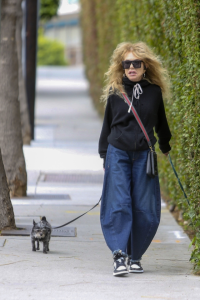
In recent years, Cannon reentered public conversation for reasons far removed from movie premieres or award ceremonies. Photographs of her in her late eighties, casually dressed while walking her dogs, circulated widely and prompted mixed reactions. Many admired her vitality and longevity, while others responded with discomfort, exposing lingering societal unease with aging—especially for women once celebrated for youthful beauty. The intensity of these reactions revealed more about cultural expectations than about Cannon herself. Her ordinary act of walking became a symbol, highlighting how society struggles to reconcile aging with former icons of glamour. In this sense, Cannon unintentionally sparked a broader conversation about visibility, dignity, and the unrealistic standards imposed on women throughout their lives.
Now in her late eighties, Dyan Cannon speaks about her life with a sense of peace that feels deeply earned. She credits her spiritual faith and personal reflection with guiding her toward genuine contentment—one no longer dependent on applause, validation, or public perception. Having lived through fame, heartbreak, reinvention, and scrutiny, she describes herself with refreshing simplicity, calling herself “a happy puppy now.” That phrase captures a quiet triumph: a woman who has stepped beyond the roles assigned to her by Hollywood and society, choosing instead to define happiness on her own terms. Cannon’s story endures not as nostalgia or caution, but as a testament to resilience, self-discovery, and the freedom that can come with age when one finally stops performing for the world and begins living for oneself.