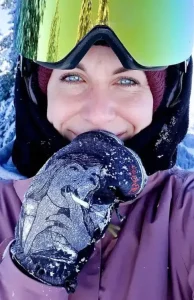
A tragic climbing incident on Grossglockner, Austria’s highest peak, has captured international attention as legal proceedings unfold over the death of a young woman. Thomas Plamberger, 39, stands accused of gross negligent manslaughter after his girlfriend, Kerstin Gurtner, 33, died during their ascent on January 19, 2025. The fatality occurred about 150 feet below the summit of the 12,460-foot mountain. According to authorities, Gurtner struggled during the climb, and Plamberger left her at around 2 a.m. to seek help, returning six and a half hours later. With temperatures plunging to -8°C and windchill near -20°C, survival in exposed alpine conditions was extremely difficult. The court proceedings in Innsbruck are now centered on conflicting accounts regarding responsibility, preparation, and decision-making under extreme circumstances.
Plamberger has described what he claims were Gurtner’s final words, in which she allegedly urged him to “go, now go!” after spending roughly 90 minutes near the summit together. Senior Public Prosecutor Hansjörg Mayr emphasized that Gurtner was left “defenseless, exhausted, hypothermic, and disoriented” approximately 50 meters below the summit cross. Prosecutors argue that as the more experienced climber and planner of the expedition, Plamberger bore responsibility for her safety. While he contends he left to get help, the delayed response, combined with harsh environmental conditions, contributed directly to Gurtner’s death. Rescue teams eventually recovered her body the following morning, underscoring the lethal risks inherent in high-altitude mountaineering.
Conflicting accounts have defined the legal arguments in the trial. Plamberger has pleaded not guilty, maintaining that leaving Gurtner was a decision made by mutual agreement and that they had been managing the climb adequately before he departed to seek assistance. However, Judge Norbert Hofer has noted inconsistencies in his testimony, highlighting discrepancies between his account and other evidence presented. Prosecutors also contend that Plamberger did not respond to an alpine police helicopter that flew over them nor to emergency calls on his phone, raising questions about negligence in crisis management. These conflicting narratives have sparked wider public discussion about accountability, preparedness, and the difficult choices climbers face in life-threatening situations.
Authorities have further scrutinized Gurtner’s preparedness for the climb. Prosecutors pointed out that she wore soft snow boots, unsuitable for high-altitude conditions, and alleged that Plamberger failed to move her to a sheltered location or provide basic survival gear such as thermal blankets or bivouac equipment. These details underscore the extreme hazards of alpine environments, including cold, wind, and limited visibility. Gurtner’s mother, however, defended her daughter’s skills, stressing that she was in excellent physical condition and had completed challenging climbs both solo and with Plamberger. She criticized media coverage as a “witch hunt,” highlighting the importance of recognizing Gurtner’s experience rather than portraying her as unprepared.
The personal context adds another layer of complexity to the case. Plamberger and Gurtner were reportedly planning to move in together and described their relationship as happy and trusting. Plamberger emphasized that he is a self-taught climber with considerable experience in alpine conditions. His lawyer, Kurt Jelinek, described the incident as a tragic accident without intent to harm. This human dimension complicates the legal evaluation, illustrating the tension between personal ambition, adventurous spirit, and the responsibility of ensuring a partner’s safety in extreme environments.
The case has sparked broader ethical and public debates about high-altitude mountaineering. Observers have highlighted the dangers of extreme climbs and the need for rigorous preparation, communication, and emergency planning. Simultaneously, it raises questions about legal responsibility and shared decision-making when unpredictable environmental factors contribute to fatal outcomes. Some emphasize individual accountability, while others caution against immediate judgment, noting that mountaineering often involves split-second choices under life-threatening conditions.
As the trial continues, public discourse has focused on balancing personal risk, relational responsibility, and societal expectations of ethical behavior during dangerous activities. Media coverage, family statements, and expert opinions have shaped the conversation, emphasizing both respect for the deceased and the need to evaluate accountability fairly. The Plamberger-Gurtner case serves as a somber reminder of the inherent dangers of extreme adventure, the consequences of decision-making under duress, and the ethical and legal questions that emerge when tragedy strikes in the mountains.