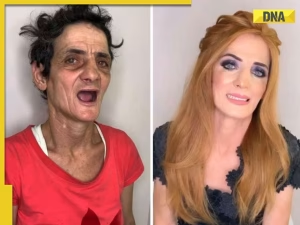
Rita’s story begins with deep personal loss that gradually unraveled every part of her life. After the death of her only son, grief became overwhelming, isolating her from stability, support, and a sense of belonging. Without family or resources to fall back on, she eventually slipped into homelessness, where survival replaced everything else. Her days were spent collecting bottles and scraps just to earn enough to get by, while years of exposure to harsh conditions took a visible toll on her health and appearance. Over time, she became invisible to society—ignored by passersby and dismissed by employers before she even had a chance to speak. This constant rejection shaped her expectations, teaching her to anticipate judgment rather than compassion. Loneliness and survival became her reality, leaving little room for hope or change.
Her life took a turning point when she met Shafag Novruz, a makeup artist dedicated to helping women who have been marginalized or forgotten. Unlike others, Shafag saw beyond Rita’s outward condition. She recognized not just hardship, but resilience—the quiet strength that had kept Rita alive despite everything she had endured. Rather than offering temporary help, Shafag approached Rita with intention and empathy, believing that restoring dignity begins with restoring self-worth. She didn’t treat Rita as a lost cause, but as someone who deserved to feel seen, valued, and human again.
The transformation began with a deeply meaningful step: dental care. Shafag arranged and paid for treatment to repair Rita’s teeth, understanding that a smile is tied closely to confidence and social connection. Years without proper care had left Rita in pain and embarrassed about her appearance, reinforcing her isolation. By restoring her smile, Shafag addressed more than a physical issue—she helped remove a barrier that had kept Rita from engaging with the world. This act alone marked a powerful shift, signaling to Rita that she was worth investing in, that her life still held value.
From there, the process moved into visible changes that carried emotional weight. Rita received a manicure and pedicure, simple but meaningful acts of care that reintroduced her to the feeling of being looked after. Her hair was colored in warm tones and styled with extensions, replacing the damage caused by years on the streets. Each step was done thoughtfully, not to erase her past but to reveal the person beneath it. Shafag’s work emphasized respect and patience, treating Rita not as a project but as an individual deserving of attention and dignity. The transformation became a collaborative act of rebuilding identity, one detail at a time.
The most powerful moment came when Rita saw herself in the mirror. After years of seeing only the effects of hardship, she was confronted with a reflection that felt unfamiliar yet deeply meaningful. Her emotional response—tears followed by laughter—captured the depth of that moment. It wasn’t just about appearance; it was about recognition. For the first time in years, she saw someone who looked like she belonged, someone who could be accepted rather than overlooked. That realization sparked something essential: hope. It marked the return of a sense of self that had been buried under years of struggle.
In the end, Rita’s transformation was not a miracle but a restoration. The before-and-after images showed the same person, but with her dignity visible again. Her story highlights how easily society can misinterpret hardship as personal failure, when it is often the result of circumstances beyond one’s control. Through compassion and intentional care, Shafag helped Rita reconnect with her identity and believe in the possibility of a future. It serves as a powerful reminder that even small acts of kindness, when done with sincerity, can change the direction of someone’s life—proving that no one is beyond hope when they are truly seen.