Her husband was abusive, so she took her children and ran away from home

They say, “When life gives you lemons, make lemonade,” and few embody that spirit more powerfully than Cara Brookins. After escaping a violent marriage, Cara—a mother of five—made the bold decision to start fresh by building her own home from the ground up. She had little experience, but a fierce determination to create a safe space for her children.

In 2007, unable to afford a home big enough for her family, Cara came up with an unconventional solution: build one herself. A computer programmer by profession, she turned to YouTube tutorials and self-drawn construction plans to learn everything from plumbing to laying a foundation. With no prior experience, it was a daunting task, but she pressed on.

Cara secured a $150,000 construction loan and bought a one-acre plot of land for $20,000. Her children, ranging in age from 2 to 17, joined in the effort. Eleven-year-old Jada hauled water from a neighbor’s pond to mix concrete, while her teenage son Drew helped design the house plans. Each day after school, they worked as a team.

To assist with more technical tasks, Cara hired a part-time firefighter for $25 an hour—someone just a step ahead of them in building knowledge. The family steadily made progress and, on March 31, 2009, they moved into the completed 3,500-square-foot home, which they named “Inkwell Manor,” reflecting Cara’s dream of becoming a writer.

Looking back, Cara admits they were initially embarrassed by their circumstances. Yet, building their own home turned out to be one of the most empowering choices she ever made. “If I can build a whole house,” she said, “anyone can achieve something big.”
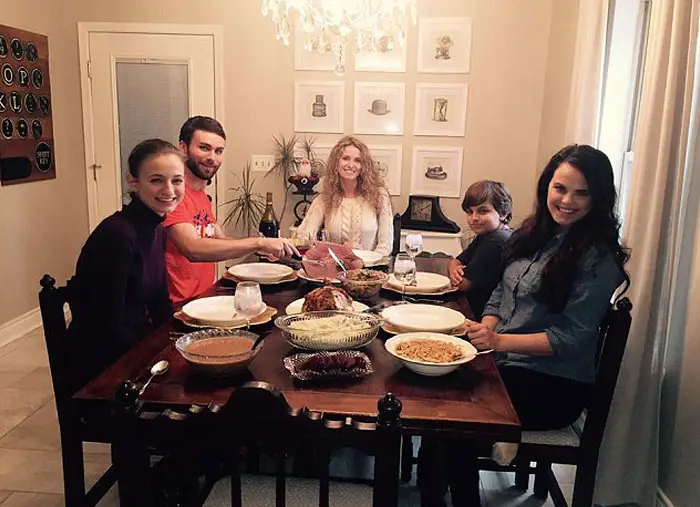
Her advice? Start small, stay focused, and bring others on the healing journey. The power to change your life is in your own hands.


 

Related Posts

A viral visual puzzle hides multiple dog shapes in a single image. How many you spot first highlights differences in perception, focus, and interpretation, showing that people process visual information in unique ways rather than measuring intelligence

What if a single image could reveal more about how your mind works than you might expect? A viral visual challenge circulating on social media has captured…

Your eggs’ appearance and smell can signal freshness and safety: cracked, slimy, or floating eggs may indicate spoilage, weak shells show age or hen issues, and clear yolks and firm whites usually mean quality and proper storage

Cracking an egg is one of the most common tasks in the kitchen, yet few people pause to consider the natural defenses that keep eggs safe. While…

If you grew up in the ’50s–’70s, you probably recall iconic objects like rotary phones, transistor radios, lava lamps, Hula Hoops, Etch‑A‑Sketch toys, and other everyday gadgets and décor that now evoke strong memories of simpler times.

Anyone who grew up between the 1950s and the late 1970s likely remembers a peculiar and somewhat intimidating metal object that puzzled those unfamiliar with the era:…

Blue porch lights often signal support or solidarity—such as honoring law enforcement and first responders or raising autism awareness through lighting campaigns. They can also represent peace, calm, safety, or community unity in neighborhoods

As the holiday season arrives, neighborhoods are transformed by the familiar glow of reds, greens, and whites, yet many observers notice an unusual addition among the decorations:…

Coin ridges, or reeded edges, were introduced centuries ago to stop people shaving precious metals off coins and make tampering obvious. Today they still help deter counterfeiting, assist machines and the visually impaired, and preserve currency integrity.

You have likely handled coins thousands of times without ever stopping to examine their details. They move easily through everyday life—paid at counters, dropped into pockets, or…

A visual “personality test” with hidden animals asks what you see first. Your initial choice is said to reflect your thinking style—analytical, creative, emotional, or intuitive—based on how your brain interprets the image before conscious reasoning.

Have you ever compared observations with someone else after looking at the same image, only to find that you noticed completely different things? These moments reveal the…

Leave a Reply

Your email address will not be published. Required fields are marked *




