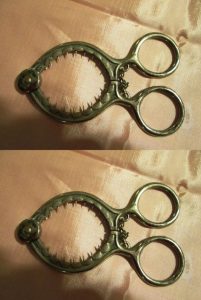
A perfectly prepared soft-boiled egg has long symbolized comfort, simplicity, and quiet refinement. Its smooth white exterior and delicately runny yolk promise a gentle start to the day, especially when paired with neatly cut toast soldiers ready for dipping. Yet despite the dish’s apparent simplicity, the act of opening a soft-boiled egg often disrupts this calm ritual. Many people attempt the familiar technique of tapping the shell with a spoon, only to find it stubbornly resistant at first and then suddenly fragile. Instead of cracking neatly, the shell shatters unpredictably, scattering fragments and sometimes rupturing the yolk before the meal has truly begun. What should feel serene becomes mildly chaotic. This small but persistent frustration reveals an overlooked truth: even the simplest routines can benefit from thoughtful design. Fortunately, there exists a clever utensil created specifically to solve this very problem, restoring both order and elegance to the breakfast table.
The device in question is commonly known as an egg topper or egg cutter. Compact and typically made of stainless steel, it often carries a subtle vintage charm that evokes memories of more ceremonious dining traditions. At first glance, its shape may seem unusual—some compare it to a small cigar cutter. It features a rounded, bell-shaped cap that sits gently over the top of the egg, along with a slender handle or vertical rod attached to a small weighted mechanism. Though its appearance may puzzle those encountering it for the first time, its purpose is highly specialized. Rather than crushing or randomly cracking the shell, the egg topper is designed to remove the top of a soft-boiled egg cleanly and evenly. In contrast to knives or spoons, which rely heavily on pressure and guesswork, this tool is engineered for precision and consistency, transforming a messy task into a controlled, elegant action.
Using the egg topper is straightforward and requires no culinary expertise. The egg is first placed upright in an egg cup to ensure stability. The bell-shaped base of the topper is then positioned directly over the egg’s tip. The user gently lifts the handle—usually connected to a small sliding weight—and allows it to drop. This small downward motion generates a controlled shock around the shell’s upper rim. The impact is subtle but remarkably precise. A fine, circular fracture forms evenly around the top of the egg. With a light lift, the separated “lid” of shell can be removed cleanly, revealing the soft white and golden yolk beneath. There are no jagged edges, no crushed shell pieces embedded in the egg white, and no accidental puncture of the yolk. What was once a precarious moment becomes predictable and satisfying, turning a fragile food into something reliably accessible.
The effectiveness of the egg topper lies in its intelligent use of basic physical principles. Instead of cutting through the shell like a blade would, it creates a quick vibration that distributes force evenly around the egg’s circumference. This uniform shock weakens the shell along a single, consistent line while leaving the rest of the structure intact. Because the energy disperses evenly rather than concentrating at one point, the lower portion of the shell remains undisturbed. The yolk, which is particularly vulnerable to sudden pressure, stays perfectly intact. This elegant solution demonstrates how understanding material properties and force distribution can transform an everyday inconvenience into a smooth, repeatable process. The simple sequence—lift, release, click—becomes almost ceremonial, and the faint sound of the clean break signals success each time.
Beyond its practical function, the egg topper introduces an element of refinement to the dining experience. There is something undeniably graceful about lifting away a perfectly cut shell cap instead of awkwardly hacking at the surface with cutlery. The gesture feels deliberate and composed, elevating breakfast from a hurried necessity to a mindful ritual. Guests often notice the tool immediately, intrigued by its unusual form and satisfying mechanism. Children, too, are frequently captivated by its simple yet dramatic action. It adds a touch of theatrical charm to brunch without requiring any additional effort or skill. In an age where many kitchen gadgets promise convenience but deliver clutter, the egg topper stands out by fulfilling its singular purpose flawlessly. It does not complicate the process; it refines it.
Equally appealing is the tool’s modest size and unobtrusive nature. It occupies very little drawer space and requires minimal maintenance. A quick rinse is typically enough to clean it after use. Despite its small footprint, it often sparks conversation when brought to the table, its retro aesthetic hinting at leisurely European breakfasts and carefully arranged place settings. For those who appreciate details such as linen napkins, matching egg cups, and thoughtfully brewed coffee, the egg topper becomes part of a broader celebration of everyday elegance. For others who simply value efficiency, it quietly ensures consistent results without frustration. Ultimately, this unassuming utensil restores dignity and reliability to the soft-boiled egg. It proves that innovation need not be complex or flashy; sometimes it is about perfecting a small, familiar action. By transforming a potentially messy moment into a smooth and satisfying ritual, the egg topper turns an ordinary breakfast into something quietly extraordinary.